Task 5: Credit
Problem to solve
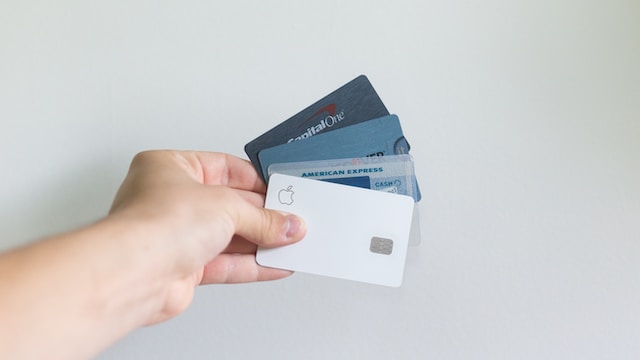
A credit or debit card number identifies an account when a card is used to pay for goods or services. These numbers are long: American Express uses 15 digits, MasterCard uses 16 digits, and Visa uses 13 or 16 digits.
Card numbers also have a defined structure:
| Card type | Number of digits | Begins with |
|---|---|---|
| American Express | 15 | 34 or 37 |
| MasterCard | 16 | 51, 52, 53, 54, or 55 |
| Visa | 13 or 16 | 4 |
They also contain a checksum: a mathematical relationship among their digits that can help detect typing errors. A valid checksum does not prove that a card number is real; an actual payment system would still need to check its database.
In a file named credit.c inside a folder named credit, implement a C program
that checks a card number's checksum and identifies its card type.
Never test this program with a real card number. Use only the example numbers provided on this page.
Luhn's algorithm
Use Luhn's algorithm to determine whether the checksum is valid:
- Starting with the second-to-last digit, multiply every other digit by
2. - Add the individual digits of those products. For example, a product of
12contributes1 + 2. - Add the digits that were not multiplied by
2. - Add the two sums. If the total ends in
0, the checksum is valid.
Worked example
Consider the Visa test number 4003600000000014.
Starting from the second-to-last digit and moving left, the digits to double are:
1, 0, 0, 0, 0, 6, 0, 4
Doubling them gives:
2, 0, 0, 0, 0, 12, 0, 8
Add the individual digits of those products:
2 + 0 + 0 + 0 + 0 + 1 + 2 + 0 + 8 = 13
Then add the digits that were not doubled:
13 + 4 + 0 + 0 + 0 + 0 + 0 + 3 + 0 = 20
Because 20 ends in 0, the number passes the checksum. It also begins with
4 and contains 16 digits, so the program should identify it as Visa.
Implementation requirements
- Prompt the user with
Number:. - Store the input in an
unsigned long long; a card number may be too large for anint. - Read the number with
scanfand the%lluformat specifier. - Apply Luhn's algorithm before identifying the card type.
- Print exactly one of
AMEX,MASTERCARD,VISA, orINVALID, followed by a new line. - Print
INVALIDwhen the checksum fails or when the length and starting digits do not match one of the supported card types.
You may assume that the input is a positive integer with no spaces, hyphens, or leading zeroes.
For example:
$ ./credit
Number: 4003600000000014
VISA
A numeric input can pass through scanf but still be too short to be a card
number:
$ ./credit
Number: 6176292929
INVALID
Hints
The remainder operator can give you the last digit of a number:
number % 10. Integer division can remove that digit: number / 10.
Keep the original number unchanged if you also need it later to check its length and starting digits.
It may be easier to solve this in three stages: calculate the checksum, determine the number of digits and prefix, and then print the result.
Compile and test
From the credit folder, run:
cc credit.c -o credit
./credit
If your system provides gcc instead of cc, use
gcc credit.c -o credit.
Test your program with these example numbers:
| Number | Expected output |
|---|---|
378282246310005 |
AMEX |
5555555555554444 |
MASTERCARD |
4003600000000014 |
VISA |
4003600000000015 |
INVALID |
6176292929 |
INVALID |
After testing, return to the Problem Set 1 overview.